
What is Multifamily Syndication and Why Should You Care?


What is Multifamily Syndication?
Multifamily syndication is a type of real estate investment where multiple investors pool their capital to purchase and manage large multifamily properties, such as apartment complexes. This collaborative approach makes it possible for individual investors to participate in deals that would typically be out of reach for a solo investor.
How Does It Work?
In a multifamily syndication, there are two main parties:
The Sponsor (General Partner):
An experienced real estate professional who identifies investment opportunities, raises capital, and manages the property.
They oversee all aspects of the investment, from acquisition to operations and eventual sale
The Limited Partners (Passive Investors):
Passive investors who contribute capital but aren’t involved in the property’s day-to-day operations.
They share in the profits generated by the property without dealing with tenant management, maintenance, or compliance.


Why Should You Care?
Multifamily syndication offers several compelling advantages:
Access to More Opportunities: By pooling resources with other investors, you gain access to larger, potentially more profitable properties that would otherwise be unattainable individually.
Passive Income: As a limited partner, you can enjoy regular distributions generated by the property without the hassles of property management.
Risk Mitigation: The shared investment model spreads risk among multiple parties, reducing individual exposure while maintaining opportunities for steady returns.
Diversification: Syndication allows you to invest in multiple properties or markets, creating a diversified portfolio that can weather economic fluctuations.
Economies of Scale: Larger properties often benefit from operational efficiencies, such as reduced per-unit maintenance costs and bulk purchasing power, potentially leading to better returns.
Professional Management: Sponsors bring industry expertise to every phase of the investment, from market analysis and property acquisition to management and optimization.
Tax Benefits: Real estate investments often come with attractive tax advantages, such as depreciation deductions, which can reduce taxable income and improve overall returns.
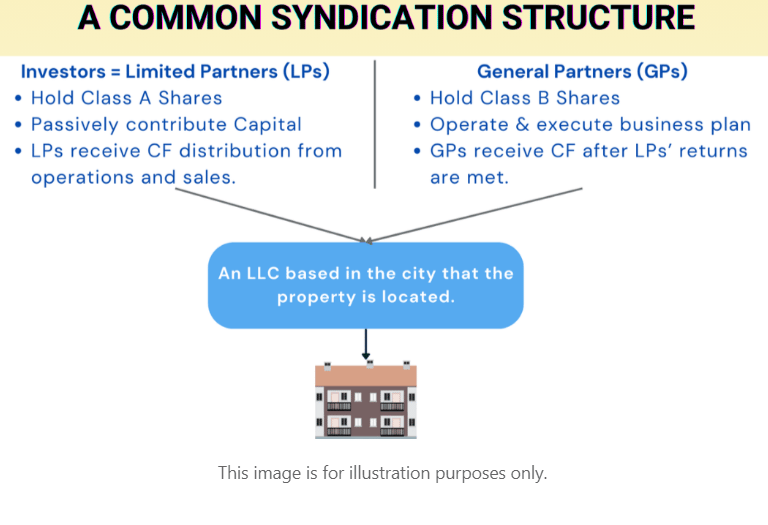
The investment is typically structured as a Limited Liability Company (LLC) or Limited Partnership (LP), with the sponsor as the general partner and investors as limited partners. This structure offers several advantages:
Limited Liability: Both LLCs and LPs provide liability protection for investors, shielding their personal assets from the syndication's debts and liabilities.
Tax Benefits: These entities often allow for pass-through taxation, meaning profits and losses are reported on individual tax returns rather than at the entity level.
Flexibility: LLCs and LPs offer flexibility in terms of profit distribution and management structure, allowing for customized arrangements that suit both the sponsor and investors.
Clear Roles: The structure clearly delineates the roles and responsibilities of the general partner (sponsor) and limited partners (passive investors).
Regulatory Compliance: These structures align with SEC regulations governing real estate syndications, ensuring legal compliance for the offering.
In an LLC structure, the sponsor typically forms a separate LLC to serve as the managing member, while investors become non-managing members. In an LP structure, the sponsor acts as the general partner, with investors as limited partners.


Is It Right for You?
Multifamily syndication is another viable option for both novice and experienced investors looking to expand their real estate portfolio. It provides a way to invest in real estate passively, with risk-adjusted returns and the potential for long-term wealth building.
However, it’s important to keep these factors in mind:
Accreditation Requirements: Many syndications are limited to accredited investors, so it’s essential to understand your eligibility.
Longer Hold Periods: Real estate syndications typically involve multi-year commitments, making them less liquid than stocks or bonds.
For business executives, multifamily syndication aligns with the need for time-efficient, professionally managed investments that support long-term financial independence.
Final Thoughts
Multifamily syndication presents a unique opportunity to participate in large-scale real estate investments without the headaches of direct property ownership. By pooling resources and partnering with experienced sponsors, you can diversify your portfolio, generate passive income, and position yourself for steady growth over time.
Understanding this investment strategy can help you make informed decisions about building wealth and securing your family’s future—without taking your focus away from your career.